How to Help an Alcoholic Partner



Protecting your own safety
Before we discuss anything else, it’s crucial to talk about staying safe. Drink can sometimes turn a partner frightening, aggressive, reckless, or unpredictable, and when it does, your safety comes before protecting them from the fallout of it. You aren’t responsible for how they act while they’re drinking, whatever excuse the drink gives them.
One official measure of domestic abuse found that alcohol was believed to be a factor in around a sixth of cases, and illicit drugs in about a tenth. If you feel threatened or unsafe, get help, whether that’s a friend, a neighbour, the police, or a domestic abuse service.
What living with a partner's drinking is like
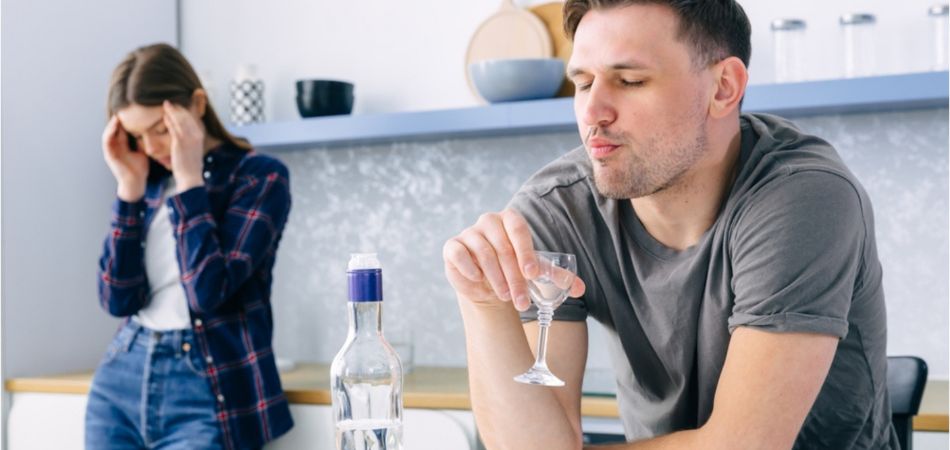
Even when there is no violence or threat, living with an alcoholic partner takes over your day-to-day life. People who aren’t in this situation may imagine it’s one big crisis, but alcohol addiction can begin to affect things at home slowly. As addiction becomes more and more stressful and disruptive, you may start to hide it from other people. This can begin with turning down nights out with friends without explaining why, and keeping things from your family.
Addiction affects everyone differently, but a partner with alcohol addiction can become very unpredictable and difficult to be with. It’s common to start feeling less close than you used to, and beginning to walk on eggshells around them because of mood swings or increasingly out-of-character behaviour.
While it should never happen, the worry and fear can become almost normalised. Many partners stop saying anything to avoid an argument, just hoping that somehow things will change on their own. This can often lead to enabling behaviour which comes from a place of love but allows the addiction to continue.
The emotional toll of alcohol addiction and relationships
Many people dealing with alcohol addiction and marriage or a romantic relationship experience guilt, resentment, anxiety, loneliness, and just sheer exhaustion. Your friendships, work, your health, and other important parts of your life can all suffer as more and more of your time and energy goes into supporting an alcoholic partner. If you are finding it hard, there is personal counselling and family support for alcoholism available across Britain. If you contact Providence Projects, we can help you find local services like Al-Anon or explain how we support the families of our clients while they’re in treatment.
Recognising the signs of alcohol dependence
The signs of alcoholism are usually a repeating pattern of behaviour and changes.
Physical signs of alcohol dependence include cravings and withdrawal symptoms when your partner stops or drinks less, and needing to drink first thing in the morning to feel “normal” or be able to function. Behavioural alcohol addiction signs include drinking more than they mean to, struggling to cut down even when they want to, feeling guilty about it afterwards, and putting alcohol before work, responsibilities, relationships, and the things that used to matter to them.
One definition of alcohol addiction is carrying on drinking even when it’s clearly damaging their health, work, money, or the relationship. No single sign proves someone has a problem, but if this pattern looks a lot like your partner, it’s usually time to consider professional support.
Talking to your partner about their drinking
The most important things about the first conversation are often the moment you choose and the tone of what you say. There really is no perfect time, but try to speak to them when they’re sober, and things in the house are mostly calm. Stay calm too, and point to specific things you’ve noticed rather than a general complaint that can feel like an attack. Tell them honestly what they’re drinking is doing to you and your relationship, then let them answer.
There is a good chance that this first conversation will seem like it’s gone nowhere at all. But the advice Providence Projects always gives on how to deal with an alcoholic partner is that it often takes more than one conversation to get through. If this one goes badly, hold off calmly, and wait for another chance.
Supporting your partner without enabling their drinking
Supporting someone with alcohol addiction can enable the addiction even though that’s the last thing you want to do. It’s understandable that you want to help them, but telling their manager they’re too ill to come in when drink is the real reason, giving them money knowing exactly where it’ll end up, tidying away the evidence before anyone else notices, or even making excuses to yourself about their drinking all create more problems.
There are many reasons for enabling an alcoholic partner, and many people just dread a row, or worry that not helping them will make it worse. If you’re not sure whether you’re enabling, ask yourself if what you’re doing helps them face the drinking, or just makes it easier to keep going.
Setting boundaries with an alcoholic means deciding in advance what you’re willing to live with, and staying with that line no matter how much they resist. That’s very different from punishing them or walking away. It may mean not covering the mortgage payment they’ve missed again, or not going out with them if they’re going to drink the whole time. A boundary is there to protect you, but it can sometimes change them too.
Medical emergencies and alcohol withdrawal
Some situations turn into emergencies fast, and spotting the difference could save your partner’s life. Severe intoxication needs urgent medical attention, and so does anything that looks like an overdose, such as if your partner won’t wake up, is seriously confused, struggling to breathe, or having a seizure. Any of this means calling 999 or getting them to A&E straight away.
If your partner has been drinking regularly for years, they shouldn’t stop suddenly. Alcohol withdrawal can bring seizures in around one in ten cases, and they can be fatal. A doctor or addiction specialist team like UKAT’s should plan and oversee alcohol detox to keep your partner safe and comfortable.
Getting help for an alcoholic partner
When you care about someone who drinks, that doesn’t mean losing yourself in the process, or putting up with treatment that causes you harm. What helps most is pointing them to proper support, sticking to your own boundaries, keeping your own life going, and putting your safety and your own mind first. Alcohol recovery has to be their choice in the end, but a partner who’s supportive and well-informed can encourage that choice without giving up their own life to do it.
Providence Project provides extensive help for families affected by alcoholism as well as treatment for the person themselves. Our treatment starts with a medical alcohol detox where withdrawal symptoms are taken care of, a programme of therapy, then ongoing support following discharge from residential treatment. Contact us today to find out how we can help.
Reach out to our expert support team 24 hours a day

Looking for rehab?
If you are looking for rehab to take your, or a loved ones, life back from addiction, look no further than Providence Projects. Reach out to us today to find out how we can help you or a loved one achieve long-term recovery.
(Click here to see works cited)
- National Health Service. “Alcohol-Use Disorder.” NHS, www.nhs.uk/conditions/alcohol-use-disorder/.
- Kulak, Jessica A., et al. “Alcohol Misuse, Marital Functioning and Marital Instability: An Evidence-Based Review on Intimate Partner Violence, Marital Satisfaction and Divorce.” Substance Abuse and Rehabilitation, vol. 16, 2025, pp. 39-53, doi.org/10.2147/SAR.S462382.
- Office for National Statistics. “Partner Abuse in Detail, England and Wales: Year Ending March 2018.” ONS, 25 Nov. 2020, www.ons.gov.uk/peoplepopulationandcommunity/crimeandjustice/articles/partnerabuseindetailenglandandwales/yearendingmarch2018.
- Drinkaware. “Alcohol Withdrawal Symptoms.” Drinkaware, www.drinkaware.co.uk/facts/health-effects-of-alcohol/general-health-effects/alcohol-withdrawal-symptoms.
- National Institute for Health and Care Excellence. Alcohol-Use Disorders: Diagnosis and Management of Physical Complications. NICE guideline CG100, 2010, www.nice.org.uk/guidance/cg100.