Hallucinogen Addiction: The Causes, Symptoms and Impacts
Hallucinogens are a group of drugs that can change your perception of reality. This includes things you see, hear and how you think and feel about the world around you and yourself. There are various types of hallucinogens but all can have powerful and often dangerous effects. Hallucinogen addiction does not get the same media coverage as other drugs and some people may wrongly think they cannot become addicted. However, many types of hallucinogens have both physical and psychological properties. Having full knowledge of the dangers can help you decide whether hallucinogen abuse is ever worth the risk and show you when it may be time for hallucinogen detox and rehab treatment.
What is hallucinogen addiction?
Hallucinogen addiction is different from the kind of drug addiction you might see with opioids, cocaine or alcohol but it is no less real. While there is not usually a physical dependence that forms (except in a few cases like ketamine), you can still become psychologically dependent on a whole range of hallucinogens.
This often stems back to the reason you started using hallucinogens in the first place. In some cases, this may be to escape from a difficult reality, connect more deeply with a hostile or confusing world or to feel closer to people when you feel isolated. If hallucinogens help you do this, it can then become difficult to go back to how things were before. This drives further hallucinogen dependence and a growing belief that you can’t or don’t want to give up. Slowly, a complete psychological addiction develops where you keep using hallucinogens no matter the pain or harm they are creating.
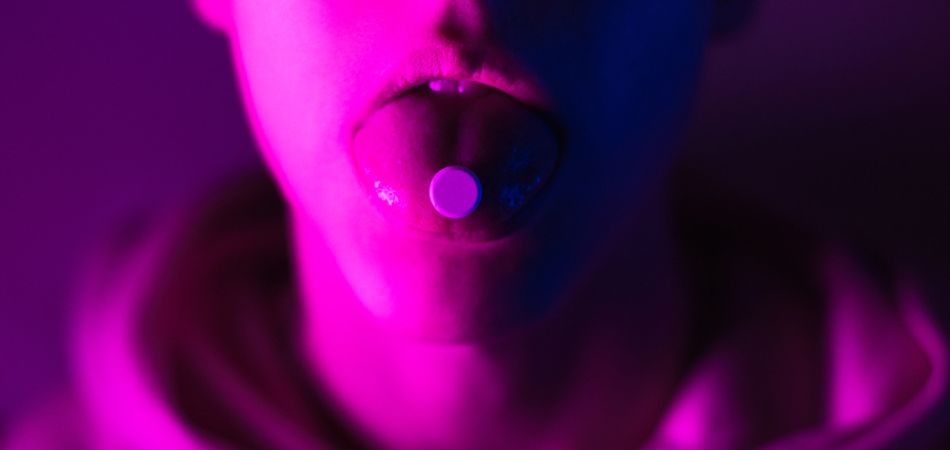
Which types of hallucinogens can be addictive?
Hallucinogens vary widely in their effects and risks but these are the hallucinogen drugs most likely to cause addiction and long-term problems:
Cannabis
Cannabis has both hallucinogenic and depressant properties and many people develop both a physical and psychological dependence on it. THC, its main psychoactive component, can cause tolerance and withdrawal symptoms if you quit suddenly, making it difficult to give up using cannabis without professional rehab and detox.
LSD
LSD (lysergic acid diethylamide) is one of the most powerful psychedelics, altering your sense of time, space and self. Physical addiction is rare, but you can quickly build up a tolerance and begin using LSD more frequently to try to recreate earlier experiences.
Ketamine
Ketamine can distort reality and create a dreamlike sense of detachment. Regular use often leads to tolerance and compulsive redosing and this can turn into a pattern of misuse and dependency. Ketamine is one of the few hallucinogens that can produce both psychological and physical dependence and ketamine addiction rates have exploded in the UK in recent years.
Magic mushrooms
Magic mushrooms contain psilocybin, which can cause vivid hallucinations and distorted thinking. While they aren’t chemically addictive, the desire to keep returning to those altered states can become habit-forming.
DMT
DMT (N, N-dimethyltryptamine) is a powerful hallucinogen that causes short but intense psychedelic experiences. Though physical addiction is unlikely, the urge to revisit otherworldly or seemingly spiritual experiences can lead to frequent use and emotional dependency.
How to spot hallucinogen addiction
This is not always easy and often depends on the type of hallucinogen drugs you are taking. For example, some common cannabis and ketamine addiction signs include using the drugs daily, building up a tolerance that requires larger doses, experiencing memory issues or bladder problems (a common side-effect of ketamine use) and feeling unable to enjoy social situations without it.
With LSD, DMT or magic mushrooms, addiction signs are more psychological. You may become obsessed with the next trip, use drugs to escape stress or numb emotions and show a growing disinterest in real-world responsibilities or relationships.
If you find that hallucinogen abuse is starting to affect your mood, relationships, health or ability to cope day to day, it could be time to talk to someone. Spotting the signs early can greatly increase the effectiveness of drug rehab and detox.
Reach out to our expert support team 24 hours a day

Start the Hallucinogen Rehabilitation Process Today
Finding the best Hallucinogen addiction treatment is vital for long-term recovery success. Our friendly and compassionate team will hold your hand through the process until you learn to love yourself again.
Hallucinogen abuse and addiction factsheet
- 1.2% of adults (16–59 years) reported using hallucinogens like LSD or magic mushrooms in England and Wales in the year ending March 2024. This rose to 2.9% in the 16–24 age group.
- UK magic mushroom use specifically rose from 0.8% to 1.1% in the same time period.
- 8% of 19–30-year-olds globally used hallucinogens in 2023, up from 5% in 2017. Hallucinogen-related ER visits in England, Wales & Northern Ireland surged 54% from 2,260 (2016) to 3,476 (2022).
- Psychedelic-related deaths also rose significantly between 1997–2022, with 25 deaths registered in total.
- 3.8% of 16–24 year-olds used ketamine in 2023, making it more common than ecstasy and seeing a 400% rise since 2013. (Click here for more ketamine statistics)
- About 300,000 adults in the UK used magic mushrooms in 2024.
- An estimated 6.8% of adults (16–59 years) reported using cannabis in 2023, rising to 13.8% of 16–24-year-olds. (Click here for more cannabis statistics)

What are the dangers of hallucinogen abuse and addiction?
Hallucinogen abuse and addiction come with some very real risks that can be easy to overlook if the first few trips felt fun and harmless.
Certain types, especially dissociatives like ketamine or synthetic hallucinogens, can cause an overdose, with dangers including slowed breathing, heart problems, seizures or coma. It is especially risky when these drugs are mixed with alcohol, benzos or opioids, as the combination can overload your system. In some cases, overdose has resulted in death, especially when users didn’t realise how strong a batch was or redosed too quickly.
Hallucinogens can also completely distort your sense of reality. When you can’t trust what you’re seeing or feeling, it is then much easier to get hurt or end up in a dangerous situation without realising it. Hallucinations can create intense fear, paranoia or even violent outbursts, especially if you’re already feeling emotionally vulnerable. The hard part is that there’s no way to predict how a trip will go so what felt freeing one day could turn into something frightening the next.
Regular hallucinogen abuse can also have a lasting impact on your thinking and mental health. In rare cases, people develop something called HPPD (hallucinogen persisting perception disorder). This is where hallucinations keep happening for months or even years, long after the drug is gone. This can be scary, unpredictable and hard to manage without help.
Finding help if you have a hallucinogen addiction
Coming to terms with a hallucinogen misuse can be difficult, especially when you’re not sure what help looks like. But you’re not the only one facing this and recovery from hallucinogen addiction is absolutely possible. At Providence Projects, we provide expert hallucinogen addiction treatment, combining detox and rehab services in a warm, supportive setting through our dedicated treatment process.
Whether it’s your first time reaching out or you’ve tried before, we are here to help you find the best way forward – Contact us today.
Reach out to our expert support team 24 hours a day
Start the Hallucinogen Rehabilitation Process Today
Finding the best Hallucinogen addiction treatment is vital for long-term recovery success. Our friendly and compassionate team will hold your hand through the process until you learn to love yourself again.
Frequently Asked Questions
How is hallucinogen addiction diagnosed?
Hallucinogen addiction is usually diagnosed through a combination of behavioural assessments, conversations and sometimes mental health screenings. At the Provy, our experts will look at how often you use hallucinogens, their impacts on your well-being and whether you feel unable to stop even when you want to. They may also use a standardised questionnaire which explores things like your mood, memory, relationships and whether you’ve developed a tolerance or experienced cravings.
What are the different categories of hallucinogens?
There are various types of hallucinogens but they usually fall into three categories. Psychedelics like LSD, psilocybin (magic mushrooms) and DMT mostly cause visual and sensory changes. Dissociatives such as ketamine can create feelings of detachment or being “outside” your body. Deliriants are a less common group that includes some antihistamines taken in high doses can cause confusion and frightening hallucinations.
Are hallucinogens used medically?
Some hallucinogens are being explored in medical and mental health research but that doesn’t mean recreational use is safe. For example, psilocybin and ketamine are being studied for their effects on depression and PTSD and ketamine has even been approved in certain forms for medical use. However, these treatments are very different from street use, where there’s no control over dose, setting or substance quality. If you are using hallucinogens to cope with difficult emotions or mental health struggles, there are safer, more effective options available.
(Click here to see works cited)
- Office for National Statistics. “Drug misuse in England and Wales: year ending March 2024.” Office for National Statistics, 12 December 2024, https://www.ons.gov.uk/peoplepopulationandcommunity/crimeandjustice/articles/drugmisuseinenglandandwales/yearendingmarch2024 – Accessed 4 July 2025.
- Kopra, Emma I et al. “Psychedelic-related deaths in England, Wales and Northern Ireland (1997-2022).” Progress in neuro-psychopharmacology & biological psychiatry vol. 136 (2025): 111177. doi:10.1016/j.pnpbp.2024.111177
- Grant, Jon E et al. “Hallucinogen Use is Associated with Mental Health and Addictive Problems and Impulsivity in University Students.” Addictive behaviors reports vol. 10 (2019): 100228. doi:10.1016/j.abrep.2019.100228
- NIDA. “Marijuana and hallucinogen use, binge drinking reached historic highs among adults 35 to 50.” National Institute on Drug Abuse, 17 Aug. 2023, https://nida.nih.gov/news-events/news-releases/2023/08/marijuana-and-hallucinogen-use-binge-drinking-reached-historic-highs-among-adults-35-to-50 – Accessed 4 July 2025.