Dangers of Mixing Metronidazole and Alcohol


You’ve picked up your prescription and are now home, reading the leaflet. Somewhere in the small print, it says to avoid alcohol while taking metronidazole, and you’re wondering how serious that advice really is.
This guide explains why the warning exists and what can happen if alcohol and metronidazole are in your system at the same time. It also covers how long you need to wait after finishing the course before it’s safe to drink again. If the idea of not drinking for a short period feels harder than it should, that’s something worth paying attention to, because support is available if you need it.
What is metronidazole?
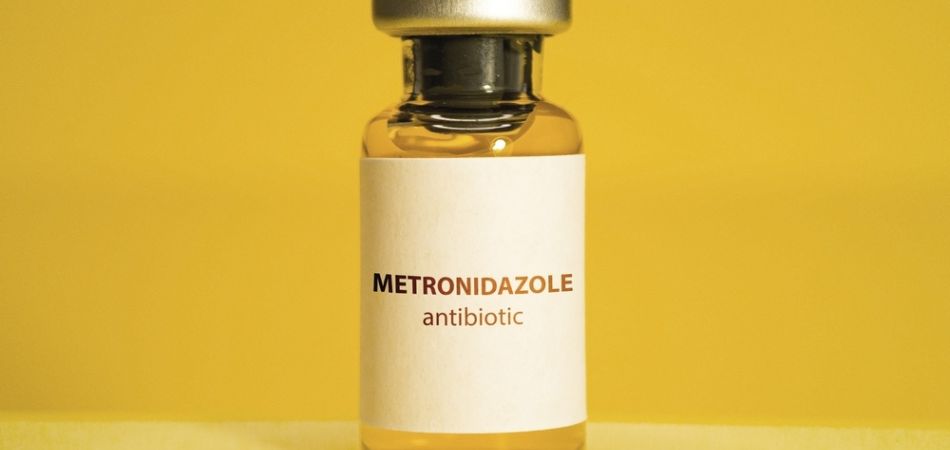
Metronidazole is a prescription antibiotic used to treat infections caused by certain bacteria and parasites. You might know it by its brand name, Flagyl. GPs commonly prescribe it for dental infections, bacterial vaginosis and other conditions.
It works by disrupting the DNA in bacterial cells, preventing them from growing and reproducing and allowing the infection to clear. It’s a widely used medication, and for most people, the course runs smoothly without any problems.
The reason you’re probably reading this page, though, is the warning about alcohol. With a lot of medications, the advice to avoid drinking is precautionary, but with metronidazole, it’s different.
There is a specific chemical reaction that happens when alcohol and this drug are in your system at the same time, and it can make you feel genuinely unwell.
What happens in your body when you mix alcohol and metronidazole
To understand why alcohol and metronidazole react the way they do, it helps to know what normally happens when you drink.
Your liver breaks alcohol down in stages, with the first stage converting alcohol into a toxic byproduct called acetaldehyde. Another enzyme normally breaks acetaldehyde down quickly into something harmless, and you barely notice the process happening.
Metronidazole interferes with that second stage, in that it blocks the enzyme responsible for clearing acetaldehyde from your system. This means acetaldehyde starts to build up in your bloodstream instead of being processed and removed. The result is what doctors call a disulfiram-like reaction, named after a drug called disulfiram that is sometimes used to treat alcohol dependence by deliberately causing this effect.
The symptoms can come on quickly, sometimes within minutes of drinking, and they can include:
- Severe nausea or vomiting
- Flushing of the face and skin
- A rapid or pounding heartbeat
- Dizziness
- Stomach cramps
- Shortness of breath
- Headaches
Even a small amount of alcohol can trigger this reaction, with a single glass of wine or a beer being enough to set it off. This is exactly why the advice is to avoid alcohol entirely rather than simply cutting back while you’re on the medication.
The symptoms pass for most people once the body has processed the alcohol and acetaldehyde levels drop again. The experience can last several hours, and while it’s happening, it can feel alarming, but it is usually not dangerous.
How long does the risk last after your last dose
This is the question most people want answered, especially if they have plans coming up. The NHS advises that metronidazole can remain active in the body for around 48 hours after the final dose. Because of this, alcohol should be avoided for at least two full days after you finish the course.
A course that ends on a Monday evening means waiting until Wednesday evening at the earliest before having a drink. Giving it a little longer than the minimum is sensible if you want to be completely sure, particularly if you’ve been on a longer course of treatment.
Starting to drink before the medication has fully cleared from your system carries the same risk as drinking during treatment, so the two-day window is worth respecting even if you’re feeling fine and the infection has cleared.

What to do if you've already mixed metronidazole and alcohol
The first thing to know if you’ve had a drink while taking metronidazole is that the reaction, while unpleasant, is not usually life-threatening.
Give your body time to process what’s happening, drink water to stay hydrated and find somewhere comfortable to sit or lie down. Avoid any sudden movements if you’re feeling dizzy, and ask someone nearby to check on you if the symptoms feel particularly strong.
You should seek emergency medical attention if you experience any of the following:
- Persistent vomiting that won’t settle
- Chest pain or an irregular heartbeat
- Difficulty breathing
- Fainting or loss of consciousness
It’s worth remembering, though, that these reactions are rare, but they require immediate medical assessment. If you’re in any doubt about whether what you’re experiencing is serious, it’s always better to get checked than to wait and see.
It’s also worth remembering that if you’ve had a reaction, your course of metronidazole should still be completed as prescribed. Missing doses or stopping the medication early because of a reaction to alcohol can leave the infection partially treated, which creates its own set of problems.
What it might mean if you couldn't stop drinking
If you’ve reached this section because avoiding alcohol for a short course of antibiotics felt unusually difficult, that’s worth sitting with for a moment.
Stepping away from alcohol for a week or two is straightforward for most people. It might be inconvenient if there’s a social event during that time, but it’s manageable. If the pull toward drinking was strong enough that you ignored the medical advice or drank knowing it would make you feel unwell, that tells you something about the role alcohol is currently playing in your life.
A few honest questions can help bring things into focus:
- Did you continue drinking even though you knew it could cause a reaction with your medication?
- Did you skip a dose so that you could drink instead?
- Did you feel restless or anxious during the period when you weren’t drinking?
- Do most of your social plans involve alcohol in some form?
- Has anyone close to you expressed concern about how much you drink?
Answering yes to any of these is not a diagnosis, and these questions aren’t intended as a diagnostic tool. But they can signal that your relationship with drinking may be worth examining more closely, particularly if the pattern extends beyond this one medication.
If alcohol has started to influence decisions about your health, speaking to someone who understands addiction can help you work out what’s going on and what your options might be.
How The Providence Projects can help
If you’re concerned about your relationship with alcohol or with a prescribed medication, The Providence Projects is here to help. We provide personalised treatment for alcohol addiction through our alcohol addiction treatment programme, as well as treatment for prescription drug addictions, through dedicated prescription drug rehab treatment.
We provide alcohol detox services in a comfortable environment, as well as access to therapeutic services that help get to the root cause of the addiction. We also provide aftercare support through elements such as our secondary care options, sober living management and alumni programme to ensure that you’re supported during your transition to your home environment.
If you’re ready to take action or you’d prefer to talk through your situation first, our team can have that conversation with you. Contact The Providence Projects today for a confidential conversation about your next steps.
Reach out to our expert support team 24 hours a day

Looking for rehab?
If you are looking for rehab to take your, or a loved ones, life back from addiction, look no further than Providence Projects. Reach out to us today to find out how we can help you or a loved one achieve long-term recovery.
(Click here to see works cited)
- Weir, C. B., & Le, J. K. (2023). Metronidazole. In StatPearls. StatPearls Publishing. https://www.ncbi.nlm.nih.gov/books/NBK539728/
- Patient.info. (2026). Can I take metronidazole and alcohol together? https://patient.info/medication-interactions/metronidazole-and-alcohol-interaction
- NHS. (2021). Common questions about metronidazole. https://www.nhs.uk/medicines/metronidazole/common-questions-about-metronidazole/